

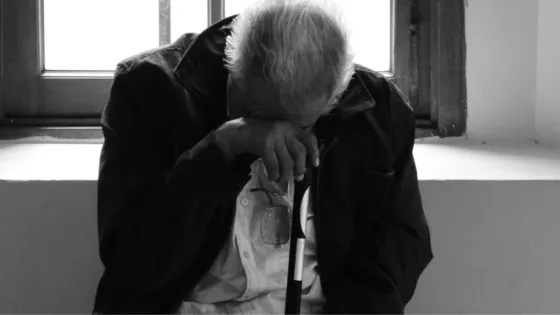
Caregiver Stress and Family Trauma Supporting the Hidden Workforce
In long term care, we spend a great deal of time thinking about two groups: residents and paid staff. But there is a third group that moves through your facility every day, whose stress levels directly affect resident outcomes, and who have almost no formal support structure: family caregivers.
Family members who are involved in a loved one's long term care are not visitors in the traditional sense. They are caregivers. Many of them have been caregiving for years before placement — often in isolation, often while managing their own health challenges, grief, and financial strain. By the time their loved one arrives in your facility, many of them react from the overwhelm they have been living with.
What Family Trauma Looks Like on Your Unit
A family member who calls the nurses' station multiple times a day, who questions every care decision, who becomes visibly upset during visits — this person is often described as "difficult." Reality? They are someone whose nervous system has been in high-alert for a long time, and who has not yet found reason to trust that their loved one is safe in your hands. It may be a new skill for them.
Unable to avoid their own discomfort, they point the flames towards your staff and the facility.
That response isn't irrational. SAMHSA's data shows that 70% of adults in the United States have experienced at least one traumatic event. Watching a parent, spouse, or sibling lose the ability to care for themselves — and then placing that person in the care of strangers — is a profound loss. For many families, it activates past events that still run their lives in unconscious ways. The Buddhist teacher Pema Chodron says all everyone is trying to do is not feel our uneasiness--and this is a classic situation in which everyone, families, staff, and residents feels uneasy. Shifts in power, issues with trust, the ability to dial feelings up and down, communicate clearly? These all produce uneasiness that combines with the dynamics of power.
The Connection to F699 and Resident Outcomes
The F699 framework is built around the understanding that personal histories shape responses to care and to providing care. But residents (and staff) don't exist in isolation from their families. A resident whose adult child arrives in distress for every visit, whose family interactions are tense and tearful, is being exposed to emotional triggers that your care plan may not anticipate. Family trauma is resident trauma. And because families interact with staff, it also evokes staff histories as well.
Conversely, when families feel seen, informed, and trusted as partners in care — when the transparency and collaboration principles of trauma-informed practice extend to them — they become one of the most powerful resources you have for understanding what a resident needs and for reinforcing the safety that trauma recovery requires.
What Your Team Can Do
Supporting family caregivers doesn't require a new program. It requires a shift in how your staff are trained to read and respond to family distress — the same TR-EQ skills that support resident care. It requires intake conversations that acknowledge the caregiver's journey, not just the resident's history. It requires family communication that is consistent and transparent, especially during difficult transitions.
The hidden workforce of family caregivers is not a compliance topic. But it is a care culture topic — and in long term care, culture is compliance. When your organization is genuinely trauma-informed, families feel it. Residents feel it. And surveyors, whose job it is to see the gap between intention and reality, find less to cite.
Let's build a culture where every person in your building — resident, staff, and family — feels the difference. Book a call: https://elizabethpower.com/calendar



Email our Admin:
©Copyright 2025 EPower & Associates, Inc. All Rights Reserved.
Privacy Policy | Terms of Use
Featured On...
