
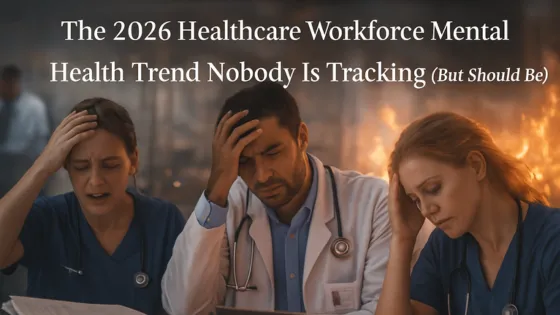
The 2026 Healthcare Workforce Mental Health Trend Nobody Is Tracking (But Should Be)
While everyone's focused on retention numbers and engagement scores, there's a deeper shift happening in healthcare workplaces that most organizations are missing entirely.
It's not burnout—though heaven knows we've got plenty of that. It's not quiet quitting, where people do the bare minimum until they leave. It's something more insidious, and it's spreading through healthcare teams like an emotional virus.
We call it quiet cracking.
What Quiet Cracking Actually Looks Like
Quiet cracking is that moment when capable, committed healthcare workers start disconnecting—not because they're lazy or don't care anymore, but because staying fully invested feels too risky. It's a form of emotional self-protection that shows up in ways leadership often misses:
The nurse who used to suggest workflow improvements but stopped after her ideas were dismissed three times in a row. She's still competent, still professional—but she's no longer bringing her full thinking to work.
The manager who quit advocating for his team's needs after being told repeatedly to "manage expectations down" instead of addressing systemic problems. He shows up, does his job, meets his metrics—but the passion that made him a great leader has quietly dimmed.
The high-performing unit that became rule-followers after a reorganization stripped away their autonomy. They're still meeting standards, but the innovation and collaboration that made them excellent? Gone.
Why This Matters More Than You Think
Here's what makes quiet cracking so dangerous: it looks like adequate performance. These folks aren't causing problems. They're not complaining loudly. They're just... present. Doing what's required. Nothing more.
But that "nothing more" is where healthcare excellence actually lives. It's in the informal innovations that happen when people care enough to think about improvements during off-hours. It's in the voluntary collaboration across departments that solves problems before they escalate. It's in the institutional knowledge people share when they're invested in their colleagues' success.
When quiet cracking takes hold, you lose all of that—and most leadership teams don't notice until it's too late.
The Real Cost
Research shows that over half of employees experience some level of quiet cracking, with one in five experiencing it frequently or constantly. In healthcare, where we're already stretched thin, this silent disengagement compounds every other challenge we face.
It's not just about individual workers checking out. Quiet cracking spreads through teams, eroding the collective energy that keeps units functioning during crisis. When one person's disconnection becomes normalized, it gives permission for others to pull back too. Pretty soon, you've got an entire team going through the motions—and nobody can quite remember when things changed.
What's Driving It
Quiet cracking doesn't happen because people are weak or ungrateful. It's a rational response to feeling undervalued, invisible, and replaceable. It's what happens when:
Good ideas get ignored without explanation
Extra effort goes unrecognized while inadequate performance gets tolerated
Promises about support or resources don't materialize
Change happens to people instead of with them
Your healthcare workers aren't quiet cracking because they stopped caring about patients. They're protecting themselves from the pain of caring about an organization that doesn't seem to care back.
Why 2026 Demands Attention
As we move deeper into 2026, the healthcare workforce isn't bouncing back—it's adapting to chronic strain by disconnecting. The people you're counting on to navigate the next crisis, implement the next system change, or sustain your culture of excellence? They're quietly cracking under the weight of too many changes managed poorly, too many promises unkept, too many years of being told to do more with less.
If you're not tracking quiet cracking, you're missing the trend that will define your workforce stability for years to come.
Get Started: https://elizabethpower.com/contact




Email our Admin:
©Copyright 2025 EPower & Associates, Inc. All Rights Reserved.
Privacy Policy | Terms of Use
Featured On...
