

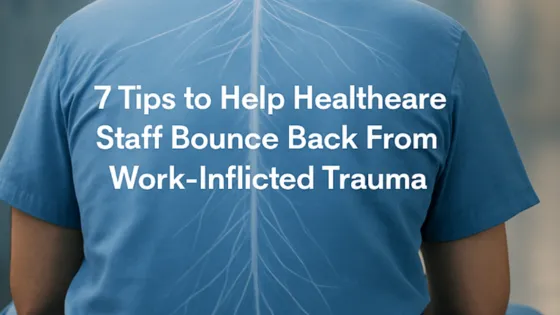
Seven Tips to Help Healthcare Staff Bounce Back From Work-Inflicted Trauma
You can't unsee what you've seen. You can't unknow the weight of split-second decisions that change lives.
This is work-inflicted trauma—not what you bring to the job, but what the job gives you. The moments, the shifts, the days, weeks and months that are so overwhelming you think you might lose your mind (seriously).
Here's what wellness initiatives miss: you can't yoga your way out of neurobiological overwhelm. But you can build capacity to metabolize it, recover from it, and keep doing this work without it destroying you.
1. Name What's Actually Happening
Stop calling it "stress." When you witness suffering, absorb families' grief, or make impossible decisions with insufficient resources, that's traumatic exposure. Your nervous system is responding exactly as it should to ongoing threat and being overwhelmed.
Naming it accurately matters because it changes how you respond. "I'm stressed" invites pushing through. "I'm overwhelmed by what I’ve seen and need a little support” or “I’ve experienced something traumatic. I need support" invites getting support.
2. Regulate Before You Reflect
After intense shifts, your instinct might be to process everything immediately. But when your nervous system is dysregulated, that processing just retraumatizes you.
Regulate before processing. Breathe deeply. Move your body: flail, dance, shake, work out or whatever you can do to use the big muscles. Ground yourself, putting your feet on bare earth, reminding yourself “that was then and this is now” and look at pictures on your phone of people you love.
Only then can your brain integrate what happened without coding it as ongoing threat. It can take 20 minutes to two days for your brain to re-regulate. Even if you are a person whose training focused on extreme exposure--say, and EMT or combat-exposed military or a healthcare professional? It still takes time.
3. Create Micro-Recovery Moments
Waiting until you're off-shift to recover doesn't work. The cumulative load is too heavy. You need micro-moments of regulation throughout your day.
Between patients, take three deep breaths. During charting, drop your shoulders. Before difficult conversations, spend 30 seconds noticing something neutral. Wear jewelry that reminds you of someone you love and notice it. What clothing can you wear that reminds you of someone? Even if it’s just funny socks, it helps. These aren't luxuries—they're how you prevent accumulation.
4. Build Your People Portfolio
You need different people for different kinds of support: someone who understands the work, someone removed from healthcare, someone trained in how these experiences impact you. Make a quick list of the people you can call in the middle of the night, those you can spend time with on the weekend, and those you might only see occasionally. This helps you identify gaps.
Stop trying to get all your support from one source. Build a portfolio that can hold different pieces of what you carry.
5. Protect Your Basics Fiercely
Sleep, nutrition, and movement aren't nice-to-haves. Irregular meals and poor sleep impair your brain's ability to regulate stress hormones and recover from emotional intensity. Think about your body as a vehicle that you must fuel and maintain. If breakfast is important to you? Pack it with foods that help you stay energized. Lunch maybe? What can you make and take or buy in the cafeteria that fuels you with less fat and less processed foods?
What is your pre-sleep ritual to help you relax (besides alcohol and drugs)? Long shower? Reading? Tucking yourself in? Is your sleeping room dark and cool?
Yes, you walk all day. And every muscle in your body begs to flex. consider adding something like tai chi, yoga, or other activities that help you keep active. Working out is great--however you do it.
Guard these basics like you guard your patients' vital signs.
6. Practice Productive Emotional Expression
Suppressing emotions everywhere creates toxic stress. You need outlets: journaling, physical activity, art, music, talking with trusted others. The goal isn't to eliminate feelings—it's to move them through instead of storing them in your body. You want to have “elastic emotions” so you regulate yourself and as a result help co-regulate others.
7. Know When to Get Help
If you’re doing “sort of” ok, you might want a coach to help you optimize skills. If you’re experiencing flashbacks, emotional numbness, hypervigilance that won't shut off, persistent hopelessness—these need professional support.
Seek someone who not only advertises they are “trauma-informed” but who also understands moral injury.
The Truth About Bouncing Back
You're not trying to bounce back to who you were before. This kind of chronic exposure changes you. The goal isn't resilience that erases impact—it's resilience that integrates experience while protecting and even building your capacity to keep showing up. That resilience also embeds the development of emotional intelligence through a trauma-responsive lens.
You can't do this work without being affected by it. But you can do it without being destroyed by it.
On Wednesday, February 25 at 11:00am Central Time, please join me for a webinar on this topic. We will further the discussion and reveal the hidden warning signs that predict turnover. Register here:https://thetraumainformedacademy.com/catching-quiet-cracking



Email our Admin:
©Copyright 2025 EPower & Associates, Inc. All Rights Reserved.
Privacy Policy | Terms of Use
Featured On...
